Cardboard Core Crafting
Uses for cardboard rounds and tubes, no glue required.

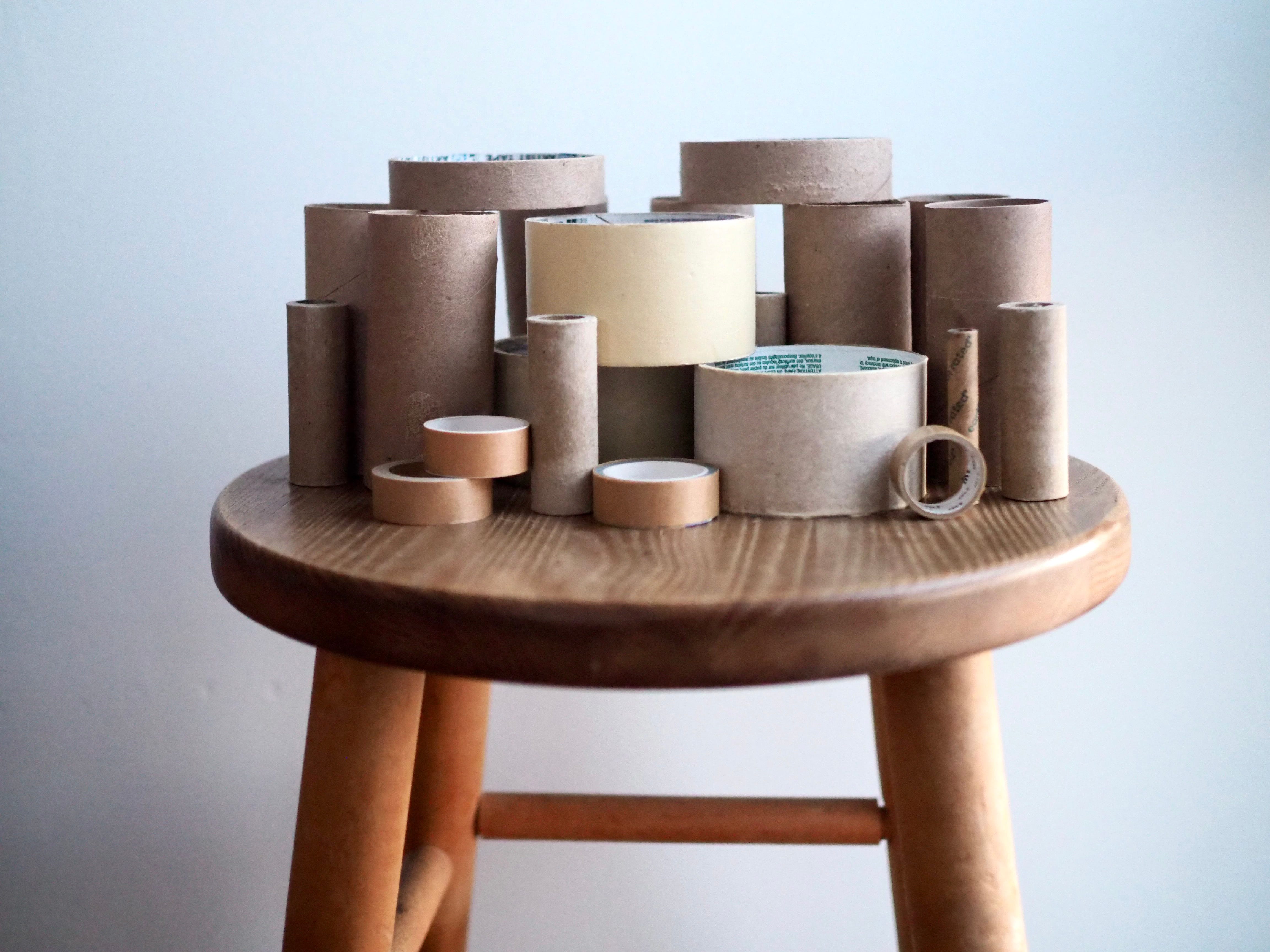
It probably surprises no one that I save cardboard cores: toilet paper rolls, string spools, tape rounds, and thanks to a reader’s question, doggy poop-bag tubes. Much like PeeWee Herman’s tin-foil ball, I keep a rather ridiculous collection of these rounds strung together and hanging on my bathroom shower rod. Whether it’s gerbil habitats or gift packaging, I’m ready with the cardboard cores.
Since each type and make of hollow tube is different in thickness, diameter, and length, I have different uses for each variety. The ideas below are not an exhaustive list, but a smattering of quick, low-supply, easy-to-make projects. These are projects that I hope provide practical use or a little bit of fun; hot glue gun not required.
Toilet Paper Roll
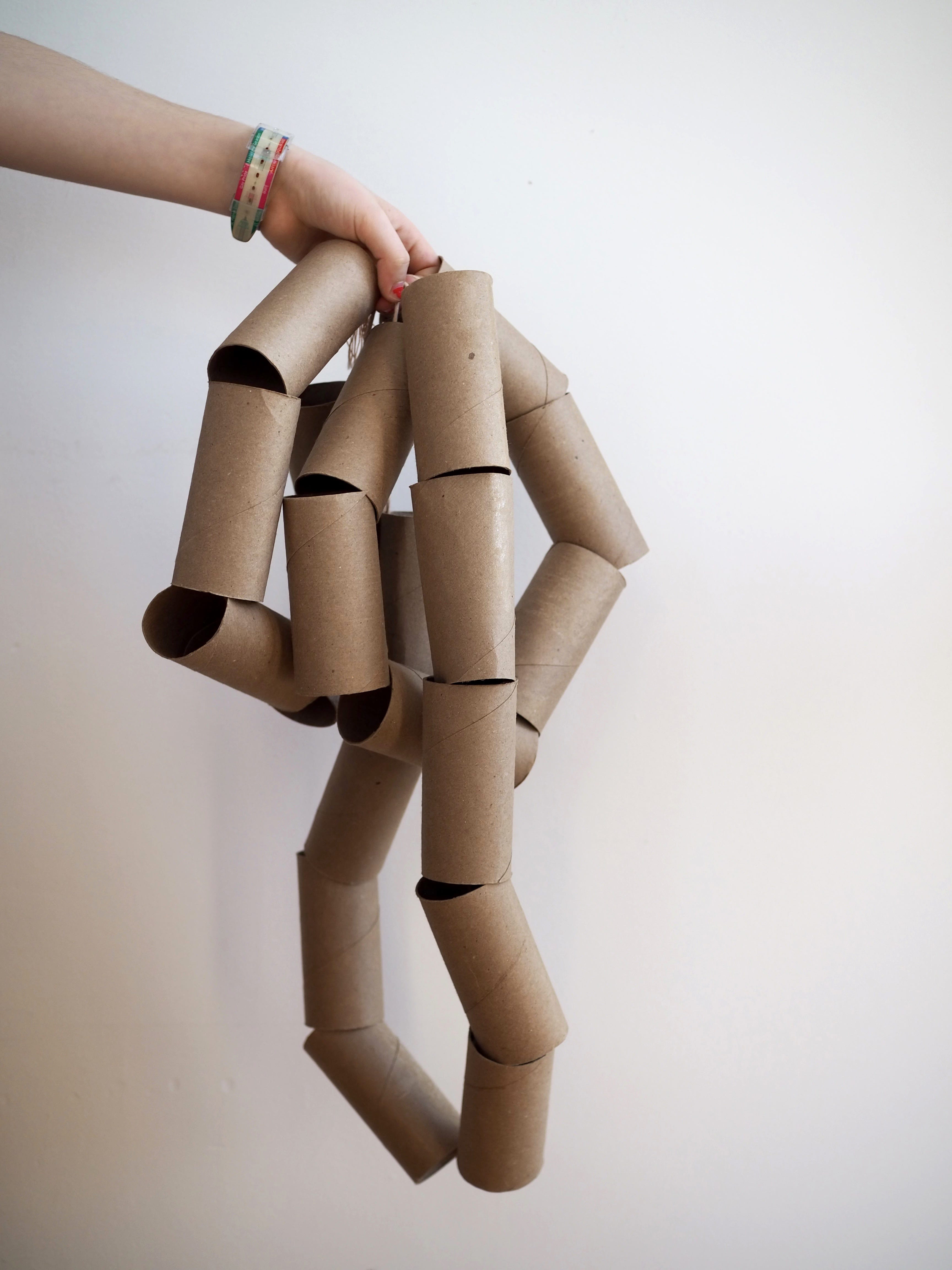
Some toilet paper rolls are strong and sturdy, some flimsy and weak, fortunately, either one can work for the crafted options below.
Vertical Phone Stand:
Say you want to face-time while hands-free, and with no phone holder in sight. Well, here you go. The cut is simple, as pictured below.


Packaging Gifts and Storing Wrapping Paper/Posters:
Toilet paper tubes are wonderful packaging material for small, hard-to-wrap gifts. They can be decorate with ink or scrappy stickers, or stand proud in the unadulterated toilet paper core. Below, are two ways to create a simple box-like casing.


Without additional supplies, you can still make a secure pillow-box-like-structure from a single roll. To do so, start with one end at a time, and with your fingertips, gently bend opposite sides in towards each other until they meet in the center. The sides will slightly overlap and form points on either end. Fill your tube, and repeat the closure for the second side.
If you have a stapler, you can press together opposite edges on a tube end, and secure with a single staple. Fill the pocket opening and repeat the staple closure for the opposite end, this time closing the edges in the opposing way from the first side, to allow maximum storage.


Cracker Gift Wrap/ Paper Roll Bind:
If you have paper to cover the tubes, simply wrap the cardboard starting from one paper edge to the opposite edge. Twist the ends of the overlapping paper to create a cracker-like gift. A ribbon tie on either side is optional. Or, as friend and co-author, Erin Boyle has shown here, use the rounds to corral papers or posters by simply cutting down the length of each cardboard core and using it to bind a paper/poster roll.
String Cardboard Cores
Party Poppers:
These thick, narrow cardboard cores are commonly used as a base for cord and string spools. While the cardboard tends to be very strong and sturdy, the opening on these cores is small. With a water-balloon and some ammunition, in the form of berries or beans, you can simply create a tiny, but very powerful launcher. A toy that requires discretion and clear rules of conduct if you choose to introduce it to children.


Cording Tool:
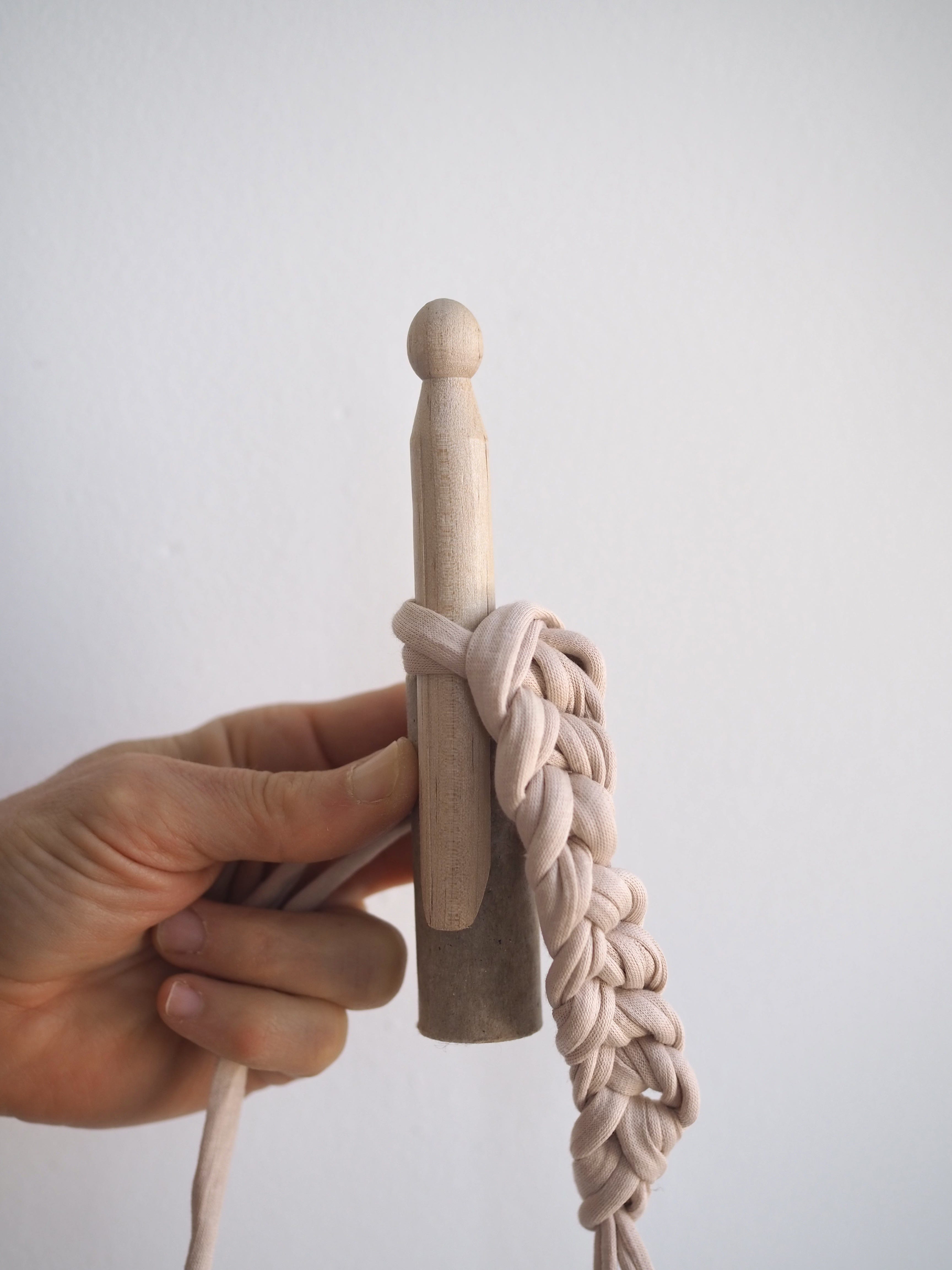
Making Things goes into great detail about how to finger cord using a variety of fibers and why you would want to (also mentioned in my post here). However, if you wanted to cord some string using a tool that’s not connected to your hand, you could swap your fingers for a laundry peg secured on a tube. One peg, or two, there are multiple ways to cord, and so many uses for these beautiful, functional braids.
Washi tape core
I-Cord Tool:
When I was a child, I had an i-cord making tool that resembled a doll called a ‘Knitting Nancy’. These contraptions, dolls or not, are otherwise known as a french knitting tool, and are circular wooden spools that have 3 or 4 metal loops protruding on one end. With this tool, you can make endless lengths of tightly knit cord using any scrap yarn or string you have on hand. Making your own knitting spool might look scrappy, but works just as well as the store purchased version. To assemble one yourself, all you need is a Washi Tape core, 3 to 4 mini (.25) binder clips and scrap lengths of string/ yarn.
The tape core I had was particularly small. Otherwise you can get 4 clips instead of the 3 pictured along the perimeter. Either way, it works up to create a tight braid.
See the video tutorial below.


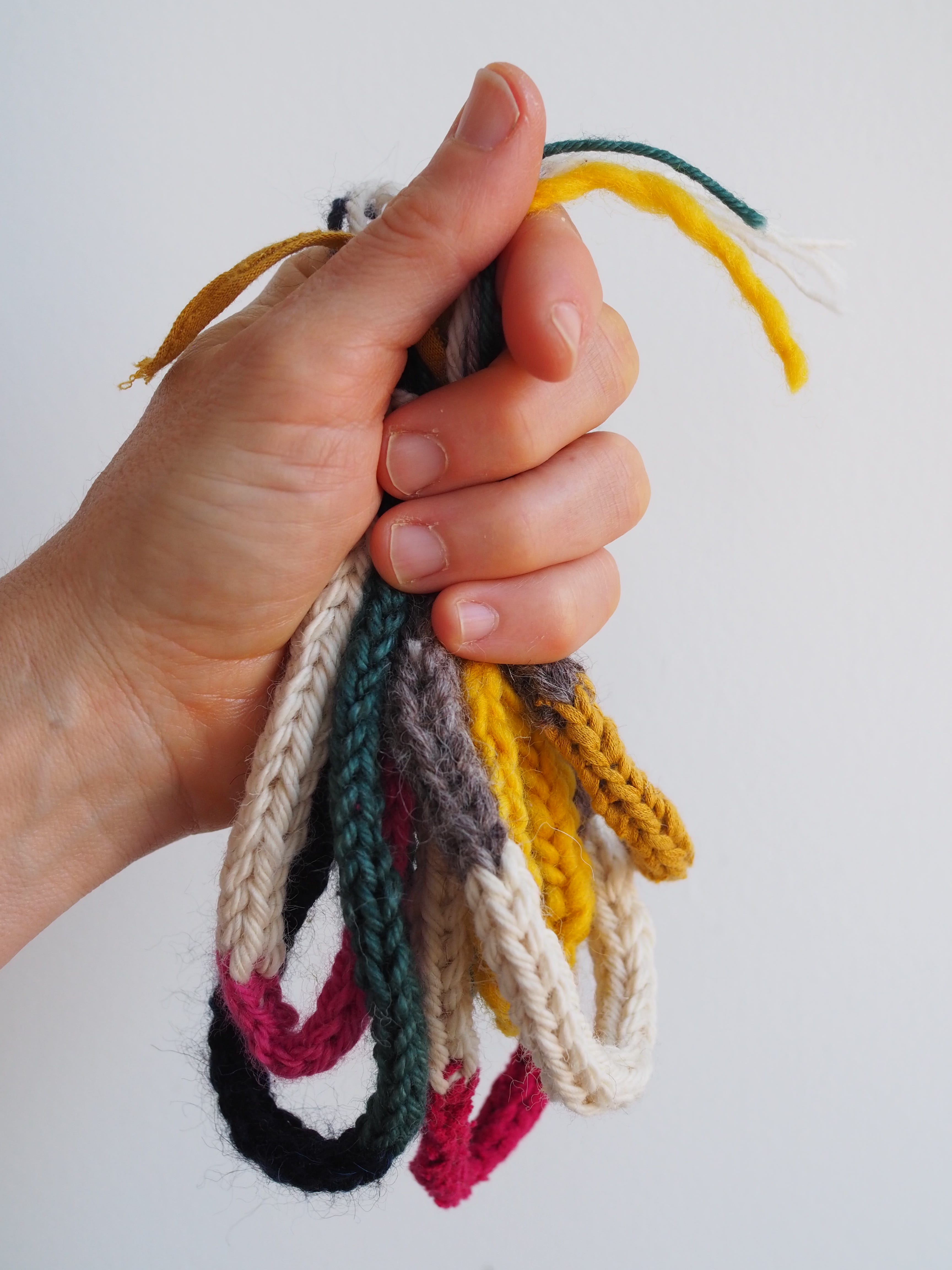
How to set up, caste on and knit an i-cord using Washi Tape core, 3 or 4 mini-binder clips and scrap yarn (video above).
+How to caste off and finish your i-cord (video above).
+To change colors while knitting, simply knot the two yarn ends together. Continue to use the knitting tool, the knotted yarn and tail ends will naturally work its way inside the tube, concealing any loose ends and knots.
+If desired, a common tapestry needle makes a great tool for picking up and moving stitches. This is especially helpful for the finer yarns and fibers that are hard to pick up with just your fingertips.
Masking Tape Core
Pompom/ Tassel Tool:
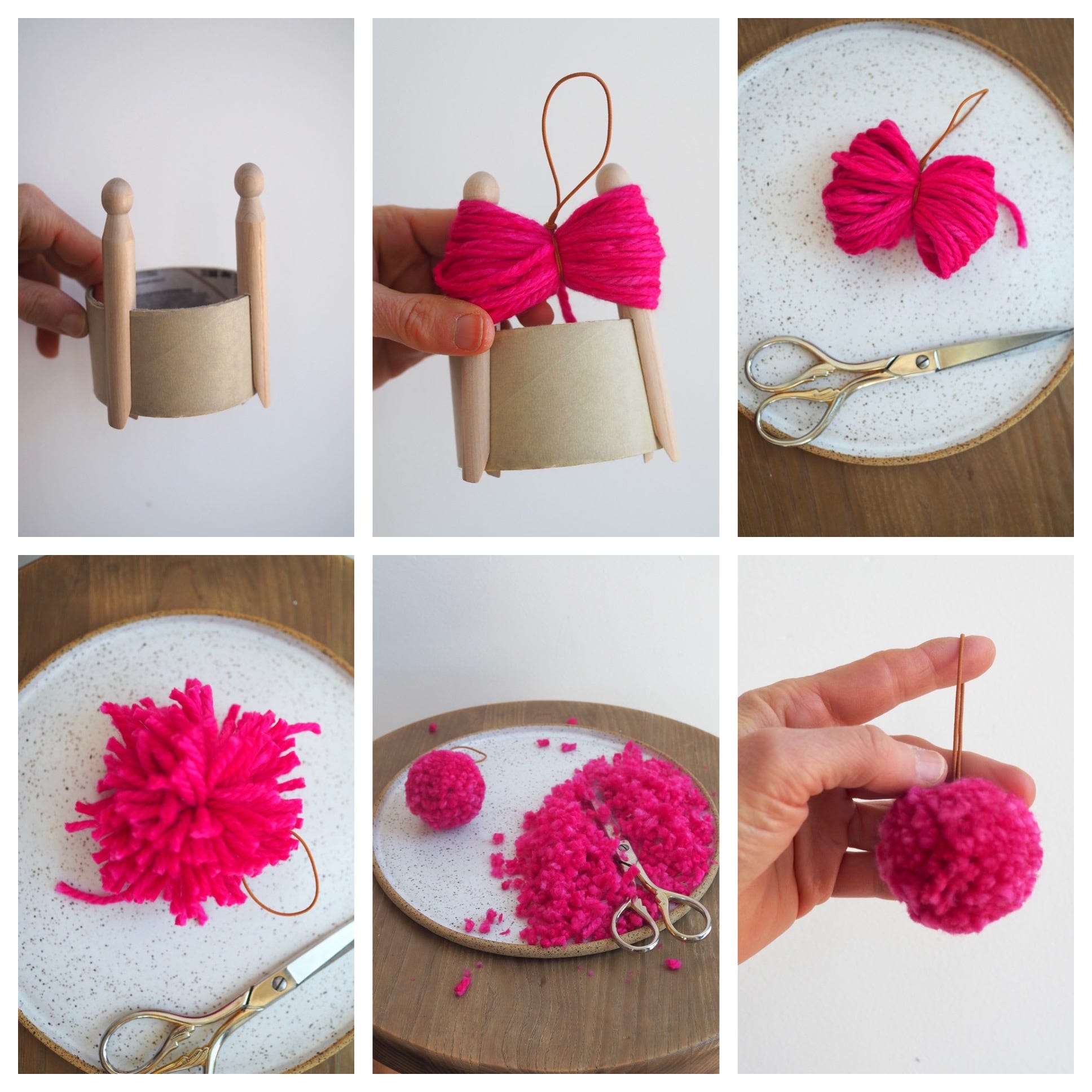
Two laundry pegs on a tape core make a great pompom tool, or if you like, tassel maker. It’s of course, a Making Things project. Below, I used elastic for the center tie so it can easily be worn in the hair or hang from a door knob.
Small Pouch/Flower Frog:
Same pegs, same tape core, same technique as the i-cord maker. Just increase the number of laundry pegs and you’re knitting in the round and on your way to creating a small pouch. Also, referenced with Post Holiday Bouquet, you can alternately make a flower frog when you swap out yarn for bind wire. The mini pouch version (below), makes a perfect doggy poop-bag dispenser, since the drawstring-like adjustment creates an opening that can be closed or widened for dispensing and refilling the bags, (again as seen in Making Things).


Dog Poop Bag Core
And speaking of doggy bags, my whole deep dive into cardboard cores came from one reader’s question about what to do with poop bag center spools. They are teeny, solid cylinders and I was, for weeks, completely stumped.


String Bobbin and Needle Storage:
While I realized that the tiny spools could simply be used to hold string and thread, I felt like I could come up with something a little more exciting. Then, this past weekend, while teaching a workshop at Tatter, I saw tiny spools of thread the same size as the dog bag ones, and realized that the hollow center is a perfect vessel for storing sewing needles. To secure the needles inside, I cut a sliver from a wine cork and wedged it into one end of the tube. The wedged cork acts like a pin cushion so a needle could be pierced while cradled inside, keeping it protected, in place, and easily accessed. Simply use the outside perimeter of the spool to wind your favorite bits of string or threads and tuck the tail into a cut incision on the end of the tube. To do this simply make a small cut with a knife. Mini spools of threads with needles also make perfect candy tin supplies for travel.
And isn’t it great when you’re stumped (i.e. doggy poop bag cores) to call on a friend for some ideas?

Also, friends, I am happy to take on requests if you have scraps you think might be worth saving.
x
My 12 year old daughter is the crafty one in the family and saves all the toilet paper rolls in a drawer under the sink. She uses them to make binoculars for her little brothers, gift bags for her party last year (filled with stickers and temporary tattoos and then balloons over the ends which were part of the favor) and now we are using them for seedling planters by bending the bottom inwards and taping one side shut.
Oh wow — the packaging ideas are really going to revolutionize stocking stuffers next year. I love giving/receiving small, useful things that are hard to wrap.